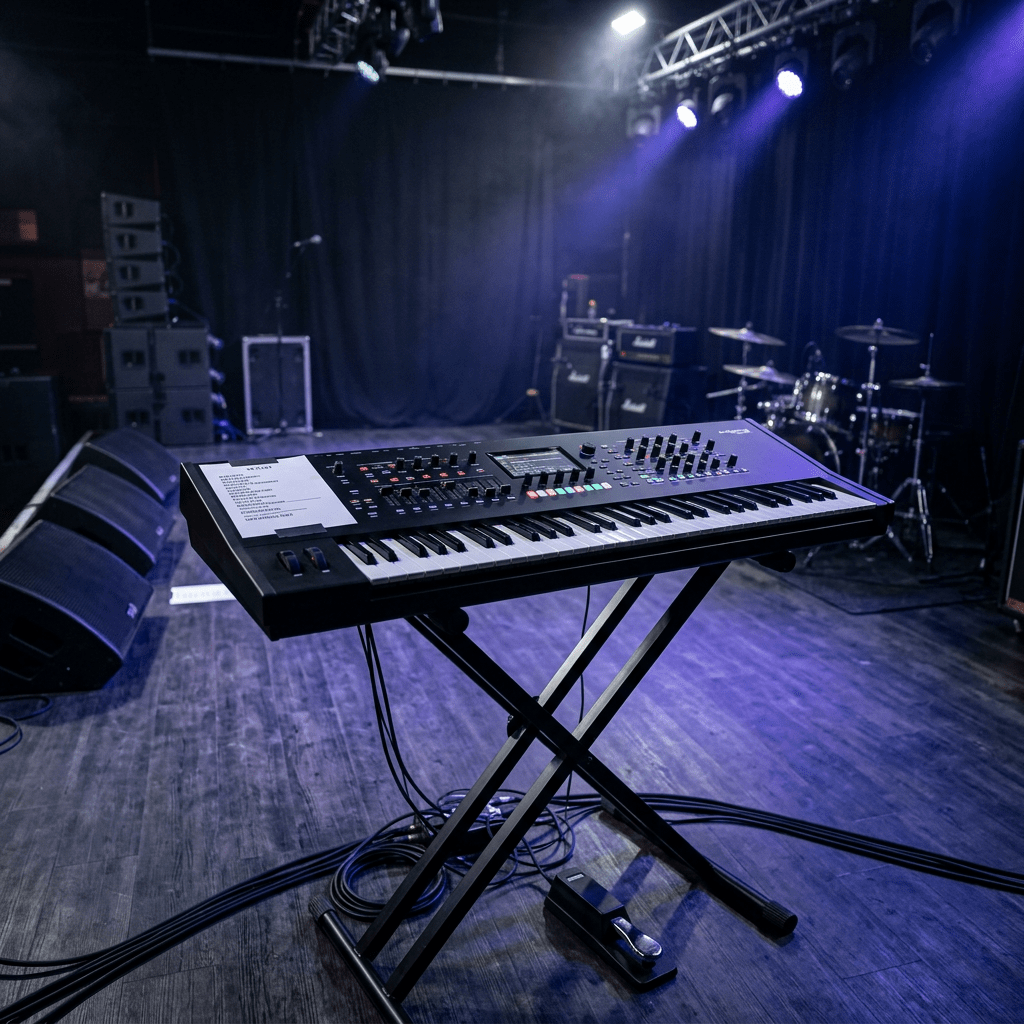
Exploring sounds with a synthesizer
One of the most exciting parts of learning music technology is exploring sound design, and synthesizers are one of the best tools for doing that. A synthesizer, or “synth,” is an instrument that generates sound electronically. Unlike traditional instruments, which rely on physical vibrations (like strings or air), synths allow you to create and shape sound from scratch. For beginners, this opens up a world of creative possibilities.
Every synth starts with a basic sound source called an oscillator. The oscillator produces a waveform, which determines the basic tone of the sound. Common waveforms include sine waves (smooth and pure), square waves (hollow and buzzy), and saw waves (bright and rich). One of the first things you should try in a synth is switching between these waveforms and listening to how the sound changes.
Filters and eq’s
After the oscillator, the next important tool is the filter. A filter shapes your sound by removing or emphasizing certain frequencies. For example, a low-pass filter allows lower frequencies to pass through while cutting off higher ones, making the sound warmer or more muted. By adjusting the filter cutoff and resonance, you can dramatically change the character of a sound.
Another key component is the envelope, which controls how a sound evolves over time. The most common type is the ADSR envelope—Attack, Decay, Sustain, and Release. Attack determines how quickly the sound reaches its peak, decay controls how it drops after the peak, sustain sets the level it holds, and release determines how long it fades out after you stop playing. By tweaking these settings, you can create anything from short, punchy sounds to long, ambient pads.
The Freedom to experiment
Most DAWs come with built-in synthesizers, so you don’t need expensive equipment to get started. You can use a MIDI keyboard or even your computer keyboard to trigger sounds. Try creating a simple melody or chord progression, then experiment with different synth settings to see how the mood changes. As you grow more comfortable, you can explore additional features like modulation (using one signal to control another), effects (reverb, delay, distortion), and layering multiple sounds together. But don’t feel pressured to learn everything at once. Focus on the basics and enjoy the process of discovery.
Sound design is where technical knowledge meets creativity. There’s no single “correct” sound—only what fits your vision. By exploring synths and experimenting freely, you’ll not only improve your music tech skills but also develop your own unique sonic style.
 Chordwire
Leave a comment